Water Damaged Flooring Restoration in Saskatoon
Water damaged floors in your Saskatoon home? We assess hardwood, laminate, carpet, and subfloor and restore what can be saved. Honest assessments, quality results.
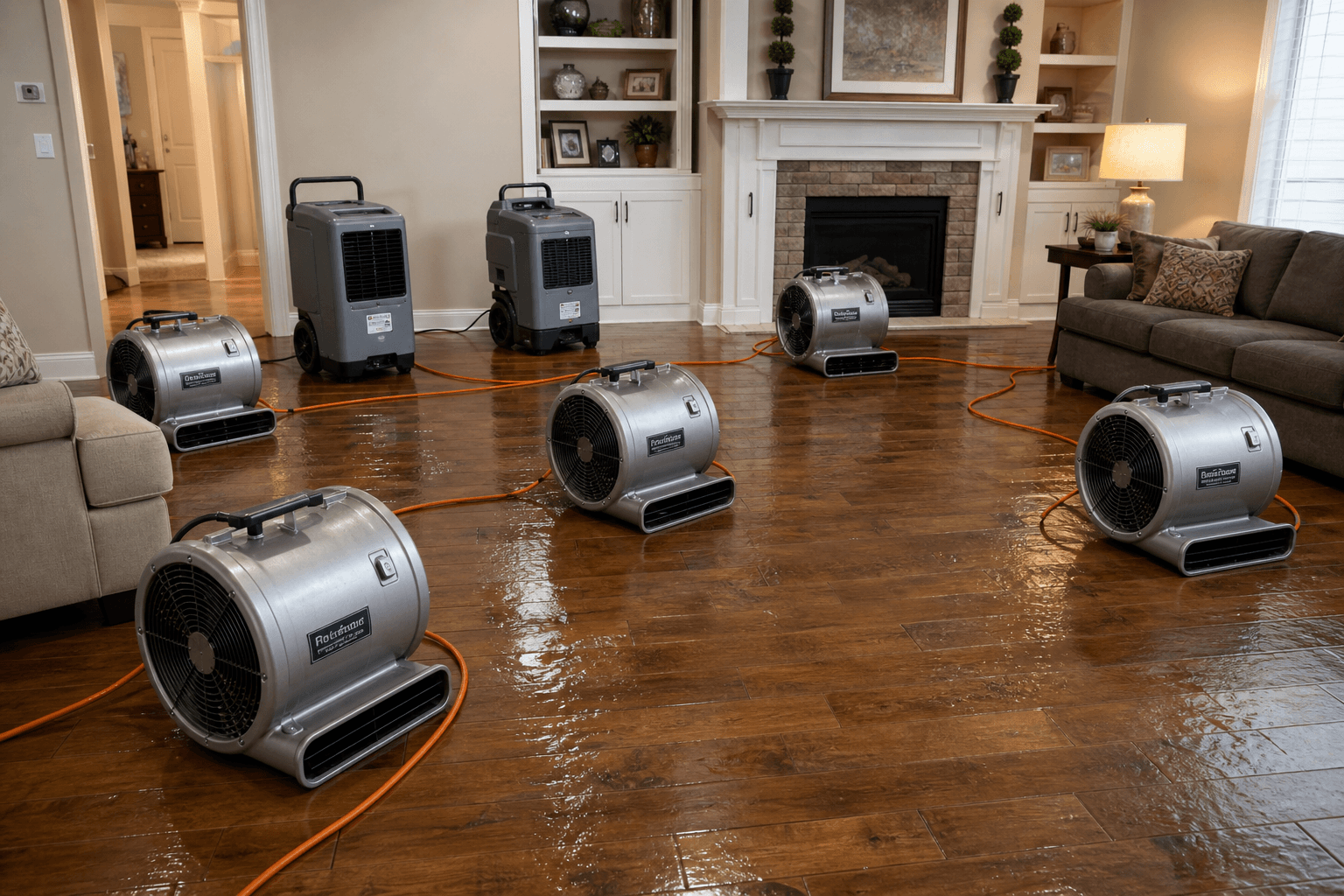
About This Service
Water affects different flooring types in very different ways. Hardwood floors can often be saved if they are dried quickly and correctly — cupping and crowning can be reversed with the right equipment and timing. Laminate and engineered products are less forgiving and frequently need replacement once saturated. Carpet and padding almost always require replacement after significant water exposure. Subfloor damage is the critical variable: wet OSB and plywood lose structural integrity and become a substrate for mold. We assess each situation honestly, restore what can be saved, and give you a clear picture of what needs replacing and why.
How We Handle It
Floor Assessment
We assess each flooring type and measure moisture content. Hardwood with moisture content above target range may still be restorable with fast intervention.
Triage Decision
We tell you clearly what can be saved and what needs replacing. We do not recommend replacing flooring that can be dried successfully, and we do not recommend drying flooring that is beyond saving.
Targeted Drying
Mat drying systems for hardwood, air movers for concrete subfloor, and specialized equipment for wall base and shoe molding. Drying is monitored daily.
Restoration or Replacement
Restored flooring is assessed for any residual issues once dry. Replacement materials are matched as closely as possible to existing finishes.
Technical Standards & Methodology
Hardwood floor restoration is governed by moisture content thresholds specific to wood species and the regional equilibrium moisture content (EMC) for Saskatchewan (typically 7–9% for interior conditioned space). Solid hardwood is typically installed at 6–9% MC; fiber saturation point (FSP) occurs at approximately 25–30% MC, at which point cell wall structure begins to deteriorate. Cupping — board edges higher than centers — occurs when the bottom face absorbs more moisture than the top face and is reversible if the board has not been sanded during the cupped state. Crowning — the inverse of cupping — results from premature sanding of cupped boards and is generally not reversible. Moisture content through the board depth is measured using pin-type meters (ASTM D4444) and non-invasive radio-frequency meters. OSB subfloor common in post-1990 construction delaminates at lower saturation levels than solid lumber; replacement is indicated at ≥ 20% MC or when face delamination is present.
What's Included
- Hardwood floor drying with mat drying systems
- Subfloor moisture testing and assessment
- Carpet and pad removal and disposal
- Laminate and engineered floor assessment
- Subfloor repair and replacement where needed
- Honest, documented assessment for insurance purposes
Need Immediate Help?
We respond 24/7. Call now for emergency service or send us a message.
(639) 307-5164Send a MessageCommon Questions
Water Damage FAQ
Answers to the questions we hear most from Saskatoon homeowners dealing with water damage, flood restoration, and property repairs.
Need Help With Water Damage in Saskatoon?
Our restoration services are available around the clock. Whether you're dealing with a burst pipe or need full flood restoration, call now for 24/7 emergency response or send a message and we'll get back to you within the hour during business hours.