Professional Structural Drying in Saskatoon
Commercial-grade structural drying for Saskatoon homes and businesses. IICRC certified technicians, daily moisture monitoring, and documented drying logs for insurance.
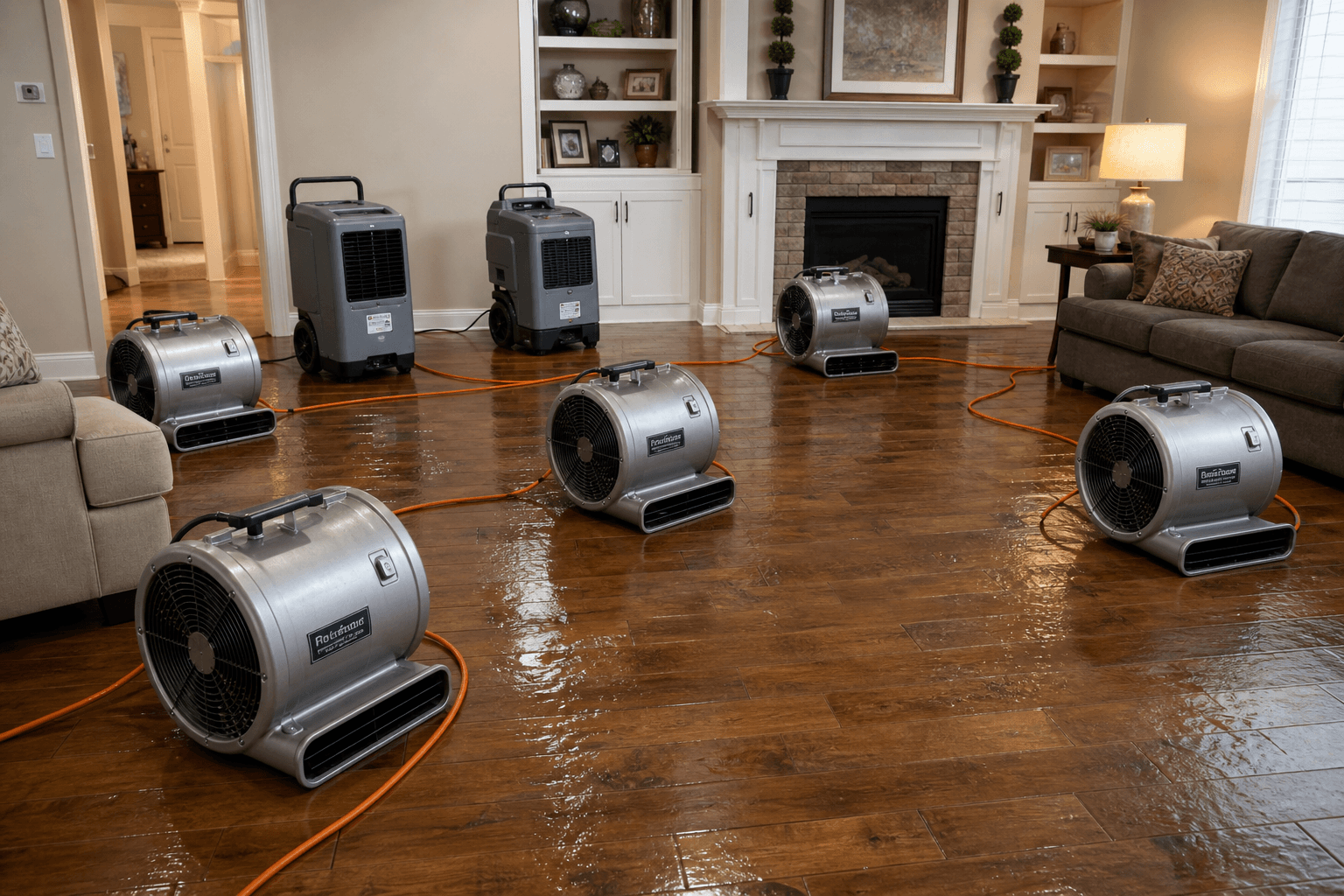
About This Service
Extraction removes standing water, but it accounts for only a fraction of the moisture in a water-damaged structure. The rest is absorbed into drywall, framing, subfloor, concrete, and insulation — invisible to the eye but measurable, and actively causing damage. Proper structural drying is a science-driven process: the right equipment, placed correctly, monitored daily, and adjusted based on moisture readings. We follow IICRC S500 standard guidelines and document every step, producing a drying log that satisfies insurance requirements and protects you from disputes.
How We Handle It
Moisture Assessment
We map every affected surface and cavity using calibrated moisture meters and thermal imaging. This establishes the baseline — how wet is the structure, and where is the moisture hiding.
Equipment Placement
Dehumidifiers and air movers are positioned according to IICRC chamber drying principles. Airflow is engineered for maximum evaporation, not just arbitrarily placed.
Daily Monitoring
We return daily to log readings, adjust equipment position, and verify progress. Drying is not a set-and-forget process — active management shortens drying time and prevents over-drying.
Final Verification
We confirm that all materials have reached dry standard (or the industry-accepted equilibrium for the specific material) before removing equipment and clearing the structure for reconstruction.
Technical Standards & Methodology
Structural drying follows IICRC S500 psychrometric protocol. Equipment loading — dehumidifiers and air movers per square foot — is calculated by Class (1–4), where Class 3 events (water saturating walls above the flood line) demand the highest loading ratios. LGR (low-grain refrigerant) dehumidifiers are the primary tool for most losses because they maintain high moisture removal capacity across a wide range of humidity conditions, typically achieving a grain depression of 50–100+ GPP (grains per pound) between inlet and outlet air under optimal conditions. Desiccant dehumidifiers are deployed in cold environments (below approximately 15°C) where refrigerant units cannot achieve efficient condensate formation, or when very low final moisture content is required. The drying curve — a daily log of temperature, RH%, dew point, and GPP — is the primary evidence that drying is progressing on schedule. Target EMC (equilibrium moisture content) for structural wood framing is 9–14% MC depending on species and regional norms; we do not remove equipment or issue clearance until readings confirm this target across all monitored materials.
What's Included
- IICRC S500-compliant drying methodology
- LGR dehumidifiers for high-performance moisture removal
- High-velocity air movers for accelerated evaporation
- Daily moisture readings logged and documented
- Drying chambers for targeted cavity drying
- Drying logs provided for insurance documentation
Need Immediate Help?
We respond 24/7. Call now for emergency service or send us a message.
(639) 307-5164Send a MessageCommon Questions
Water Damage FAQ
Answers to the questions we hear most from Saskatoon homeowners dealing with water damage, flood restoration, and property repairs.
Need Help With Water Damage in Saskatoon?
Our restoration services are available around the clock. Whether you're dealing with a burst pipe or need full flood restoration, call now for 24/7 emergency response or send a message and we'll get back to you within the hour during business hours.