Water Damage Restoration Saskatoon Trusts
Saskatoon Restoration Co. provides quality, fast water damage restoration and repair services to Saskatoon and the CMA. From burst pipes to basement flooding, we extract water, dry your structure, and restore your property to pre-loss condition. IICRC certified. Direct insurance billing. Fast response any time of day.
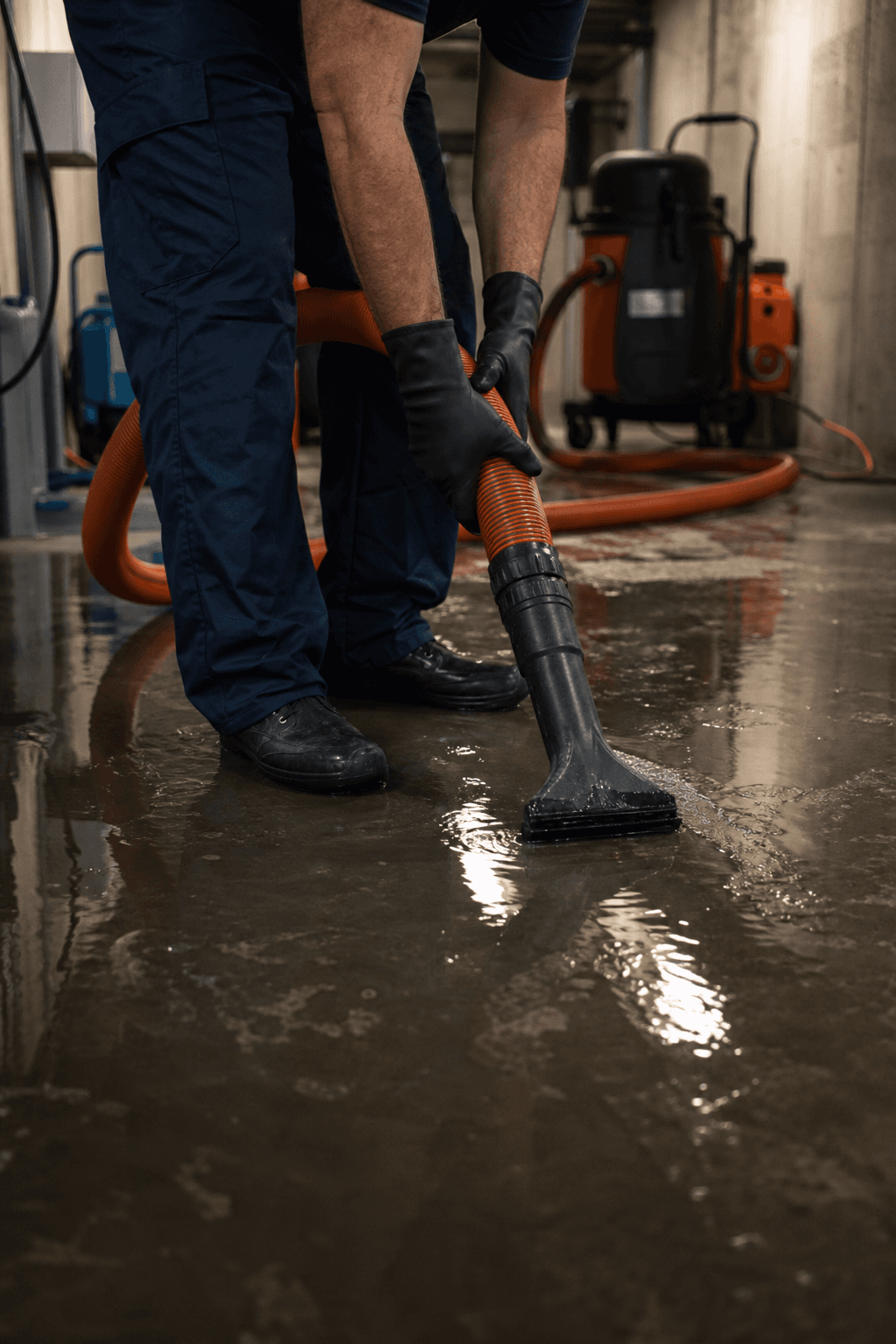
What We Do
Water Damage Repair Services in Saskatoon
We handle every stage of water damage — from emergency extraction and flood restoration through complete structural repair. Every restoration service follows IICRC industry standards.
Emergency Water Extraction
When water invades your home or business, every minute of delay increases the damage.
Basement Flooding & Restoration
A flooded basement is one of the most common and damaging water events Saskatoon homeowners face.
Ceiling Water Damage Repair
A water stain on your ceiling is rarely just a cosmetic issue.
Structural Drying & Dehumidification
Extraction removes standing water, but it accounts for only a fraction of the moisture in a water-damaged structure.
Burst Pipe Water Damage Repair
A burst pipe can release hundreds of litres of water into your home in minutes.
Sewage Backup Cleanup
Sewage backup is classified as Category 3 water — the most hazardous category in water damage restoration.
Mold Remediation
Mold can begin colonizing a wet surface within 24 to 48 hours.
Water Damaged Flooring Restoration
Water affects different flooring types in very different ways.
Storm & Overland Flood Damage Restoration
Saskatoon's prairie weather can produce severe storms with heavy rainfall, damaging hail, and strong winds — and the flat terrain means water can accumulate and enter properties quickly when drainage is overwhelmed.
Frozen Pipe Damage Repair
Saskatchewan winters are among the harshest in Canada.
Water Damage Insurance Claim Support
Dealing with a water damage insurance claim in Saskatoon is stressful enough without also managing contractors, adjusters, and documentation on your own.
Crawl Space Water Damage & Encapsulation
Crawl spaces are among the most overlooked areas of a home until they cause problems.
Why We're Different
Professional Water Damage Repair Services Done Right, From a Restoration Company You Can Trust
We're a local Saskatoon restoration company, not a franchise. Whether it's flood restoration, sewage cleanup, or structural drying, our reputation is built one job at a time — and we don't cut corners.
24/7 Emergency Response
Water damage does not follow business hours. Our dispatch line is answered around the clock and we mobilize immediately for emergencies throughout Saskatoon and surrounding communities.
IICRC Certified Technicians
Our technicians hold IICRC certifications in water damage restoration (WRT) and applied structural drying (ASD). You get professionals who understand the science behind proper drying — not just someone with a dehumidifier.
Direct Insurance Billing
We work directly with all major insurance carriers in Saskatchewan, handle adjuster coordination, and provide the documentation your claim needs. We reduce the burden on you at an already stressful time.
Local Saskatoon Company
We're not a franchise. We're a Saskatoon-based restoration company that knows the city, knows the climate, and has a reputation in this community that we protect on every job.
Honest Assessments
We tell you what the damage actually requires — not what generates the largest invoice. If flooring can be saved, we save it. If a material can't be restored, we tell you that upfront.
Complete Job, Start to Finish
From first emergency call through final inspection, one team handles your restoration. No handoffs, no coordination headaches, no gaps between trades.
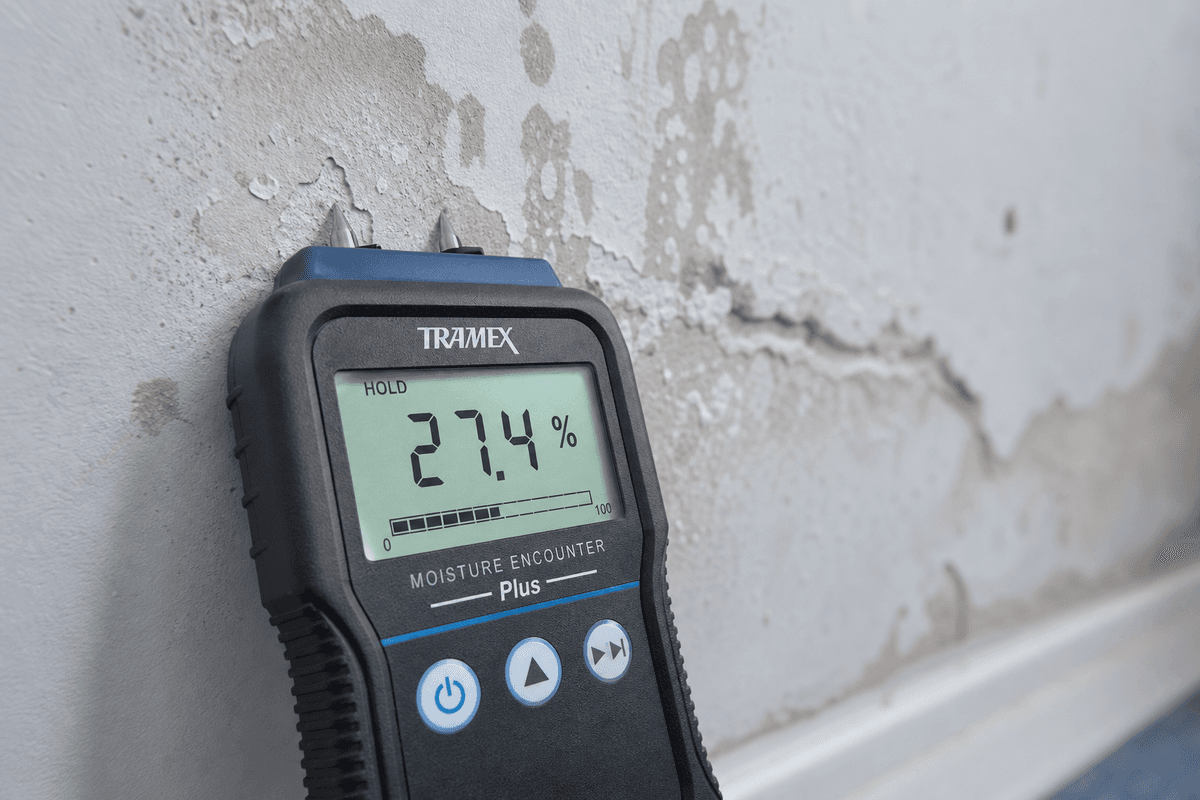
We don't guess when your structure is dry.
Every restoration service includes daily moisture readings logged until each material reaches the industry dry standard. That's what proper flood restoration looks like.
How It Works
From First Call to Finished Water Damage Repair Job
Our restoration services are managed start to finish — from emergency flood restoration response through final sign-off. Clear communication, no surprises, no gaps.
Call Us
Reach us any time — day or night. We answer every call and dispatch immediately for emergencies. Tell us what happened and we'll tell you exactly what to expect.
We Assess the Damage
Our certified technicians arrive, assess the full scope of damage using professional equipment, identify the source, and walk you through the restoration plan.
We Restore Your Property
Extraction, drying, remediation, and repairs — handled completely by our team with daily updates and documentation every step of the way.
Final Inspection & Sign-off
We verify the work is complete, moisture levels are at target, and you're satisfied before we close the job. No loose ends.
Where We Work
Serving Saskatoon & Surrounding Communities
Our restoration services cover Saskatoon and the communities within approximately 60 km. From flood restoration calls in the city to water damage jobs in Warman, Martensville, and beyond, we're close by and ready.
Project Types
Types of Water Damage We Restore
Every water damage job is different. Here's what we see most often in Saskatoon homes and buildings, and what proper restoration actually looks like for each type.
Basement Flooding
Category 1–3 Water Intrusion
Basement floods are one of the most common calls we get in Saskatoon — and one of the most damaging if not handled fast. Water can enter through foundation cracks, window wells, floor drains, or sump pump failure. Depending on the source, the water may be clean supply water (Category 1), grey water from appliances (Category 2), or contaminated sewage backup (Category 3). Each classification drives a different restoration protocol under IICRC S500.
What restoration looks like
- Emergency water extraction using truck-mounted and portable extractors
- Category 3 sewage events require PPE, antimicrobial treatment, and controlled demolition of porous materials
- Structural drying with desiccant or refrigerant dehumidifiers and axial air movers
- Moisture mapping of concrete, framing, and insulation using pin and pinless meters
Burst & Leaking Pipes
Supply Line & Plumbing Failures
A burst pipe in a Saskatoon winter can release hundreds of litres of water in minutes. Pipe failures from freeze-thaw cycles, corrosion, or pressure spikes typically produce clean water, but that window closes fast — within 24–48 hours, clean water can degrade to Category 2 or Category 3 as it contacts building materials and begins to support microbial growth.
What restoration looks like
- Rapid source isolation coordinated with your plumber
- Extraction from hardwood, carpet, subfloor, and wall cavities
- Thermal imaging to locate hidden moisture migration behind walls
- Drying equipment placement based on a psychrometric drying plan
Sewage Backup & Overflow
Category 3 — Blackwater
Sewage backup is a biohazard event, not just a water damage event. Blackwater contains pathogens, bacteria, and viruses that require professional remediation. The IICRC S500 standard is clear: porous materials like drywall, insulation, carpet, and underpad in contact with Category 3 water must be removed — not dried in place. Cutting corners here creates long-term mold and health liability.
What restoration looks like
- Full PPE protocols — respirators, Tyvek suits, glove systems
- Controlled demolition of affected porous materials
- Antimicrobial and disinfectant application to structure
- HEPA air scrubbing and negative air pressure during cleanup
Appliance & HVAC Leaks
Slow Leak & Hidden Moisture Events
Dishwashers, washing machines, water heaters, and HVAC condensate lines are among the most common sources of slow, hidden water damage. These events often go undetected for days or weeks, pushing moisture content (MC) in flooring, subfloor, and wall assemblies well above equilibrium moisture content (EMC). By the time visible staining or warping appears, secondary damage is already underway.
What restoration looks like
- Moisture mapping across flooring systems: hardwood, laminate, tile, vinyl plank
- Non-invasive pinless meters to locate moisture without opening walls unnecessarily
- Targeted drying chambers using plastic barriers to concentrate airflow
- Daily psychrometric monitoring — temperature, relative humidity, GPP readings logged
Roof Leaks & Storm Damage
Exterior Water Intrusion
A compromised roof, failed flashing, or ice dam during a Saskatoon winter can drive water deep into attic assemblies, insulation, and ceiling structure. Attic moisture events are particularly prone to mold colonization because of warm ambient temperatures, organic substrate (OSB, lumber), and poor airflow. Storm events that saturate multiple ceiling bays simultaneously require large-format drying setups.
What restoration looks like
- Ceiling cavity moisture assessment before and after temporary weatherproofing
- Attic drying with directed airflow and dehumidification
- Mold assessment protocols if materials show visible growth or odour
- Photo documentation and moisture logs for insurance claims
Mold Discovered During Restoration
Secondary Damage — Microbial Growth
Mold can begin colonizing wet building materials within 24–72 hours under the right conditions. It's a frequent secondary finding on jobs where water damage went undetected or was improperly dried. Our IICRC-certified technicians follow IICRC S520 (Standard for Professional Mold Remediation) — containment, source control, HEPA filtration, and material removal as required. We don't just spray and walk away.
What restoration looks like
- Containment barriers and negative air pressure to prevent spore migration
- Mechanical removal of affected materials per S520 protocols
- HEPA vacuuming and antimicrobial application to structure
- Clearance verification before reconstruction begins
Technical Standards
How Professional Water Damage Restoration Actually Works
Restoration is an applied science. Here's the technical framework our certified technicians use on every job — from initial moisture assessment to final drying verification.
IICRC S500
Standard for Professional Water Damage Restoration
The governing standard for all water damage restoration work. Defines water categories (1, 2, 3) and classes (1–4) based on contamination level and the rate of evaporation. Our job scoping, material decisions, and drying protocols are built around S500 requirements.
IICRC S520
Standard for Professional Mold Remediation
Guides assessment, containment, and remediation of mold in buildings. Required when microbial growth is discovered or suspected during water damage work. Includes containment protocol, HEPA filtration requirements, and post-remediation verification.
ANSI/IICRC R520
Reference Guide for Professional Mold Remediation
Technical companion to S520 covering sampling methods, clearance criteria, and documentation standards for mold remediation projects.
ASTM D7954
Moisture Measurement of Buildings
Establishes testing methods for pin-type and capacitance moisture meters in building materials, including wood framing, drywall, and engineered flooring systems.
Psychrometric Drying Science
Structural drying is not just running fans. It requires balancing three variables in the drying environment: temperature, relative humidity (RH), and airflow. Our technicians calculate grains per pound (GPP) — the actual moisture load in the air — and track grain depression across the drying chamber. A properly set drying system depresses GPP continuously until materials return to equilibrium moisture content (EMC).
Water Classification & Category
IICRC S500 classifies water damage on two axes. Category describes contamination: Category 1 (clean supply water), Category 2 (grey water from appliances or overflow), Category 3 (sewage, groundwater, or floodwater). Class describes the drying challenge: Class 1 (minimal absorption) through Class 4 (specialty drying required for dense materials like hardwood or masonry). Your restoration protocol depends on both.
Thermal Imaging & Moisture Mapping
Infrared thermography allows our technicians to identify moisture migration behind wall assemblies, above ceilings, and under flooring without destructive investigation. Cold spots on an IR scan indicate evaporative cooling from wet material. We cross-reference thermal findings with pin and pinless moisture meter readings to build a complete moisture map before any drying equipment is placed.
Structural Drying Equipment
Effective drying requires the right equipment in the right configuration. Refrigerant dehumidifiers (LGR — low grain refrigerant) work best in warm, humid conditions above 60°F. Desiccant dehumidifiers outperform refrigerant units in cold environments or when drying dense assemblies. Axial and centrifugal air movers direct high-velocity airflow across wet surfaces to accelerate evaporation. Equipment placement follows the IICRC formula based on affected square footage and material class.
Controlled Demolition
Sometimes the fastest path to dry is removal. Wet insulation, drywall, and flooring that cannot be dried in place within the acceptable drying window (typically 3–5 days) must be removed to prevent mold colonization and secondary structural damage. Controlled demolition — targeted material removal documented with moisture readings before and after — is standard practice on Category 2, Category 3, and Class 3/4 events.
Daily Monitoring & Documentation
A restoration job is not complete just because equipment is running. Technicians return daily to log temperature, RH, GPP, and moisture content (MC) readings at each material location. This data drives decisions — add equipment, change configuration, remove material, or move toward drying completion. It also provides the documentation trail required for insurance carriers and professional liability.
Mold Prevention Window
Mold spores are present in all indoor environments. What determines colonization is substrate moisture. IICRC guidelines identify 24–72 hours as the window in which wet porous materials can support active mold growth, depending on temperature and species. Rapid response — extraction and drying equipment on-site within hours, not days — is not a marketing claim. It directly determines whether a water damage job remains a drying job or becomes a mold remediation project.
Insurance Documentation
We work directly with insurance carriers and adjusters, and our documentation is built for that process. Moisture maps, daily drying logs, photo evidence of material conditions, equipment placement records, and scope-of-work reports are standard deliverables on every insured job. Direct insurance billing means you're not out of pocket waiting for reimbursement.
Common Questions
Water Damage FAQ
Answers to the questions we hear most from Saskatoon homeowners dealing with water damage, flood restoration, and property repairs.
Need Help With Water Damage in Saskatoon?
Our restoration services are available around the clock. Whether you're dealing with a burst pipe or need full flood restoration, call now for 24/7 emergency response or send a message and we'll get back to you within the hour during business hours.