Basement Flooding Restoration in Saskatoon
Flooded basement in Saskatoon? We extract water, dry your foundation walls and floor, and restore your basement to pre-loss condition. Call 24/7.
About This Service
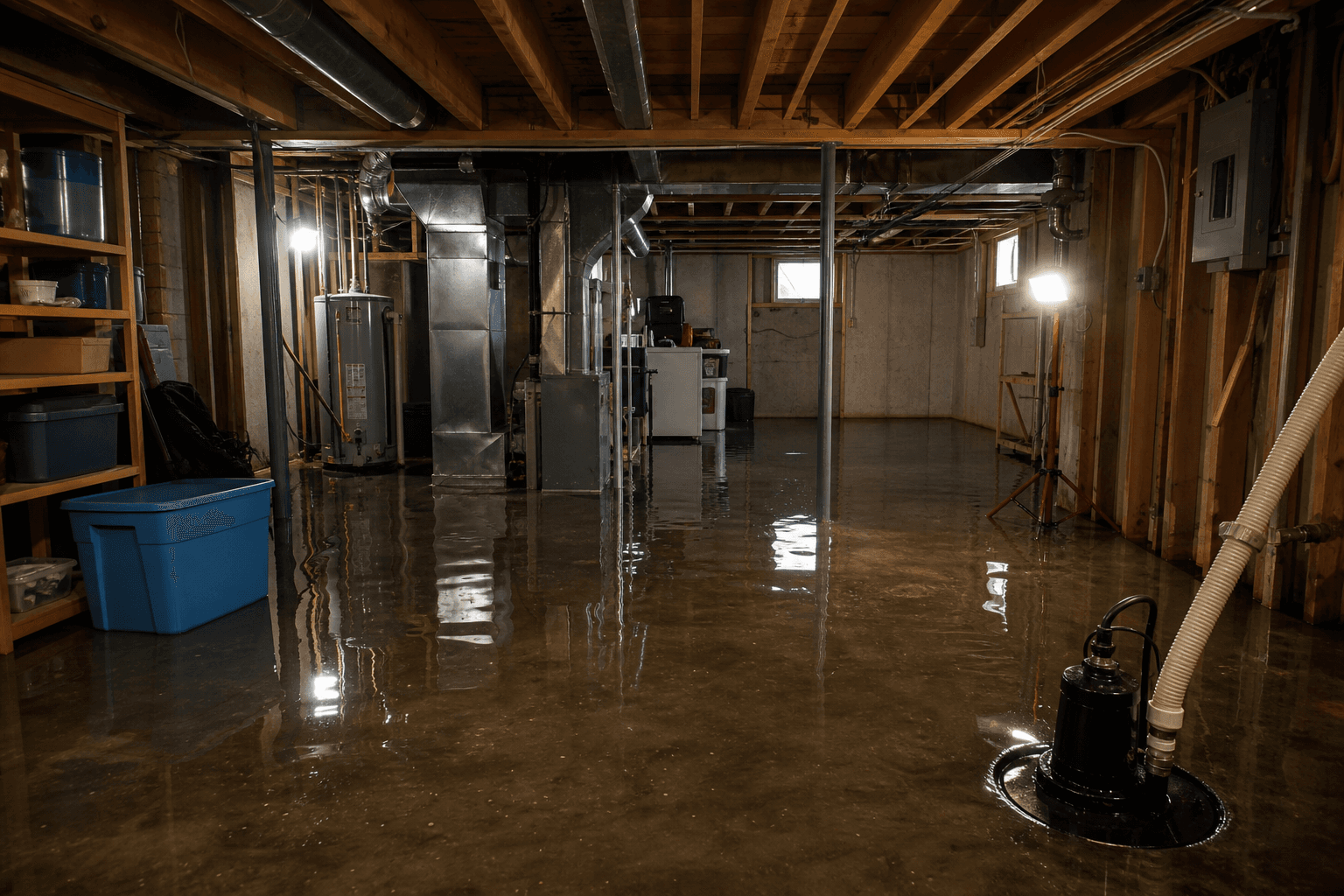
A flooded basement is one of the most common and damaging water events Saskatoon homeowners face. Sump pump failures, sewer backups, foundation seepage, and spring snowmelt can send significant volumes of water into your lower level in a short period of time. The combination of concrete, insulation, drywall, and stored belongings makes basement flooding uniquely challenging — and the enclosed environment means moisture can hide for weeks if the drying process is not managed correctly. We handle the full scope: extraction, structural drying, mold prevention, and restoration.
How We Handle It
Source Identification
We determine the source of water entry — whether it's a failed sump pump, foundation crack, or sanitary backup — so the problem is addressed alongside the damage.
Water Removal
Industrial extractors remove all standing water from the basement floor. We work systematically from the highest point of intrusion to the lowest drain.
Structural Drying
Commercial dehumidifiers and air movers dry the slab, framing, and wall systems. Moisture readings are logged daily until target levels are reached.
Cleanup & Restore
Affected materials are treated or removed, surfaces are cleaned and disinfected, and the space is documented for your insurance claim before restoration begins.
Technical Standards & Methodology
Basement flooding involving ground-contact water is classified as Category 2 or Category 3 under IICRC S500 based on the contamination source. Below-grade CMU (concrete masonry unit) foundation walls absorb and redistribute moisture differently than above-grade framing assemblies, requiring longer drying cycles and specific equipment placement against the wall plane. Hydrostatic pressure from saturated soil against foundation walls can continue driving moisture intrusion after the initial event, making source identification and correction essential before attempting to seal the structure. Concrete slab moisture content is assessed using the calcium chloride method (ASTM F1869, target ≤ 3 lbs/1,000 sf/24 hrs) or in-slab RH probes (ASTM F2170, target ≤ 80% RH) before any flooring or enclosure installation is approved.
What's Included
- High-volume extraction for flooded concrete floors
- Wall cavity drying with injection drying technology
- Sump pit inspection and temporary pump rental
- Removal and disposal of unsalvageable materials
- Antimicrobial treatment on all affected surfaces
- Final moisture verification before any reconstruction
Need Immediate Help?
We respond 24/7. Call now for emergency service or send us a message.
(639) 307-5164Send a MessageCommon Questions
Water Damage FAQ
Answers to the questions we hear most from Saskatoon homeowners dealing with water damage, flood restoration, and property repairs.
Need Help With Water Damage in Saskatoon?
Our restoration services are available around the clock. Whether you're dealing with a burst pipe or need full flood restoration, call now for 24/7 emergency response or send a message and we'll get back to you within the hour during business hours.