Mold Remediation After Water Damage in Saskatoon
Mold remediation for Saskatoon homes and businesses. Certified technicians, proper containment, and documented clearance. We eliminate mold at the source.
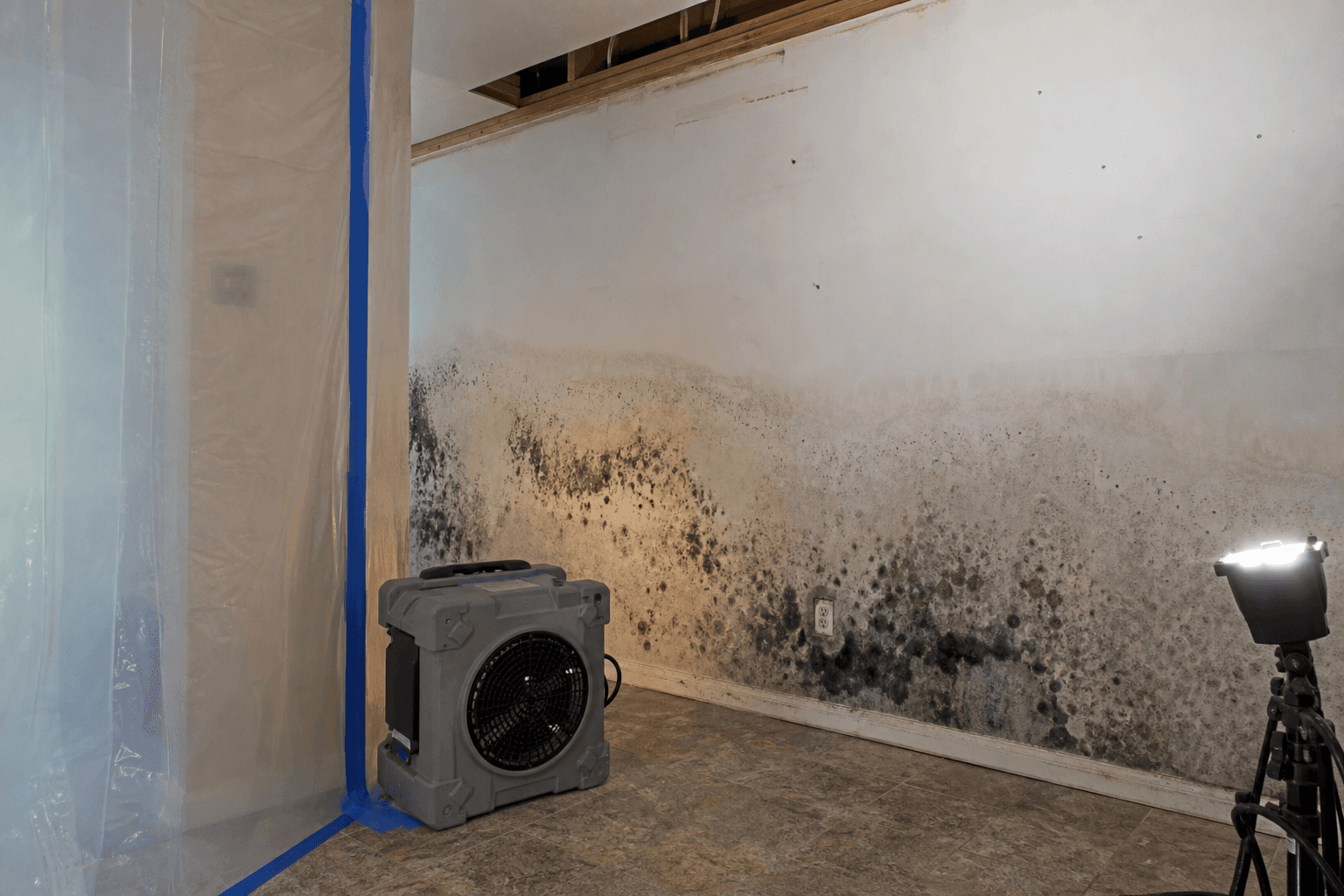
About This Service
Mold can begin colonizing a wet surface within 24 to 48 hours. In a water-damaged home, it often develops in wall cavities, behind baseboards, under flooring, and in the HVAC system — areas that are invisible until the problem has grown significantly. Left untreated, mold compromises structural materials, degrades air quality, and creates health risks for occupants. We handle mold remediation as a contained, systematic process: isolate the affected area, remove mold-damaged materials, treat remaining surfaces with antimicrobial agents, and verify clearance before the containment comes down. We do not cut corners on protocol because the consequences of a failed remediation are worse than the original event.
How We Handle It
Assessment
We inspect and assess the extent of mold growth, identify affected materials, and determine whether the moisture source has been corrected. Remediation cannot succeed if the moisture source remains active.
Containment Setup
Containment barriers and negative air pressure machines prevent spore dispersion during the remediation. HEPA filtration captures airborne spores continuously.
Remediation
Mold-colonized materials are removed and disposed of properly. Remaining surfaces are cleaned and treated with EPA-registered antimicrobial agents. HEPA vacuuming captures residual spores.
Clearance Verification
We confirm successful remediation through visual inspection and documentation before containment is removed. The space is cleared for reconstruction.
Technical Standards & Methodology
Mold remediation follows IICRC S520 Standard for Professional Mold Remediation. Active mold colonization requires three conditions: a moisture source, an organic substrate (drywall paper, wood framing, ceiling tile), and temperatures between approximately 2°C and 45°C — conditions easily sustained in a water-damaged building envelope for weeks. Remediation requires engineering controls established before physical work begins: 6-mil poly containment barriers, a negative air pressure differential of -0.02 to -0.03 inches of water column (maintained by a HEPA-filtered negative air machine rated for the contained volume), and HEPA air scrubbers providing a minimum of 4 air changes per hour (ACH) within the containment zone. HEPA filtration captures particles ≥ 0.3 microns at ≥ 99.97% efficiency, sufficient for mold spores (typically 3–100 microns in diameter). Post-remediation clearance testing may include spore trap air sampling analyzed by an AIHA-accredited laboratory to confirm spore counts at or below pre-remediation outdoor baseline levels.
What's Included
- Negative air pressure containment with HEPA air scrubbers
- Physical removal of all mold-colonized materials
- Antimicrobial treatment on all affected surfaces
- HEPA vacuuming to capture spores
- Post-remediation verification and clearance documentation
- Root cause analysis to prevent recurrence
Need Immediate Help?
We respond 24/7. Call now for emergency service or send us a message.
(639) 307-5164Send a MessageCommon Questions
Water Damage FAQ
Answers to the questions we hear most from Saskatoon homeowners dealing with water damage, flood restoration, and property repairs.
Need Help With Water Damage in Saskatoon?
Our restoration services are available around the clock. Whether you're dealing with a burst pipe or need full flood restoration, call now for 24/7 emergency response or send a message and we'll get back to you within the hour during business hours.